Puma's New Super-Shoe Sparks Controversy Over Race Legality
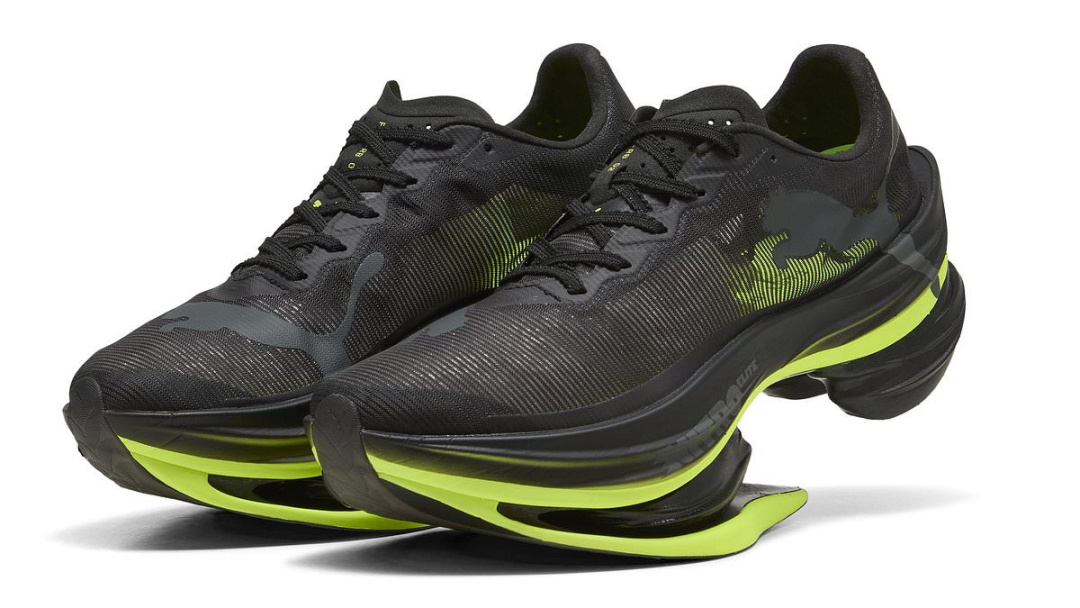
Puma has unveiled its latest innovation in running footwear, the FAST-RB NITRO Elite 2, a super-shoe that boasts the potential to break marathon world records. However, there’s a significant caveat: the £310 trainer is not race-legal, which means any records achieved while wearing it would not be officially recognized. This announcement has stirred discussions within the running community about the implications of such technology on the sport's integrity.
The FAST-RB NITRO Elite 2 is designed with two carbon plates fused together to create a 'springboard' effect, which Puma claims represents a major advancement in running technology. Romain Girard, Puma's VP of Innovation, emphasized that the shoe was crafted with a focus on maximizing energy return and performance. "With the FAST-RB 2, we set out to take rule breaking to the next level," Girard stated, highlighting the shoe's innovative design and lightweight construction.
The shoe features Puma's 'Nitrofoam Elite' cushioning, which is engineered to absorb and release energy efficiently, catering to various running styles, whether heel or forefoot striking. Matthias Hartmann, Head of Material Engineering Innovation Footwear, explained that this technology is aimed at enhancing the performance of all types of runners. The upper part of the shoe is made from 'Ultraweave', a lightweight fabric that further contributes to its performance-enhancing qualities, while the outsole is constructed from 'Pumagrip', ensuring better traction on diverse surfaces.
Despite the excitement surrounding its performance capabilities, the shoe's dual carbon plate design violates World Athletics regulations, which stipulate that race shoes can only have a single carbon plate. This regulation aims to maintain a level playing field among athletes and prevent technological advantages that could skew competition results. As a result, the introduction of the FAST-RB NITRO Elite 2 is likely to reignite debates about the role of advanced footwear in competitive running.
History of Super-Shoe Controversies
The controversy surrounding super-shoes is not new; it gained significant attention in 2019 when Eliud Kipchoge completed a marathon in under two hours while wearing Nike's Alphafly shoes, which were later deemed unofficial due to their advanced technology. This event prompted World Athletics to implement stricter guidelines regarding shoe specifications, including limits on midsole height and the number of carbon plates. The ongoing evolution of running shoe technology raises questions about the future of marathon racing and whether it can truly remain a contest of human performance rather than a showcase of shoe design.
The Run-In
As the running community grapples with these developments, experts warn that super-shoes could be seen as a form of 'technological doping'. Shaun Creighton, an Olympian and sports lawyer, noted that modern marathon shoes significantly enhance performance, suggesting that without such innovations, records like Kipchoge's might not have been possible. The challenge for regulatory bodies will be to ensure that the sport retains its integrity while allowing for technological advancements that can benefit athletes.
In conclusion, while Puma's FAST-RB NITRO Elite 2 showcases cutting-edge design and engineering, its non-compliance with race regulations highlights the ongoing tension between innovation and fairness in marathon running. As shoe technology continues to evolve, the running community must navigate these complex issues to preserve the spirit of competition.