Hip Stability Training's Impact on Marathon Runners with Knee Pain
A recent study published in PLOS One explored the effects of hip stability training on marathon runners diagnosed with patellofemoral pain syndrome (PFPS). This condition is a common overuse injury characterized by anterior knee pain, which can hinder training and performance. The research compared hip stability training with standard care to assess their impact on the quadriceps angle (Q-angle), pain during running, and overall function.
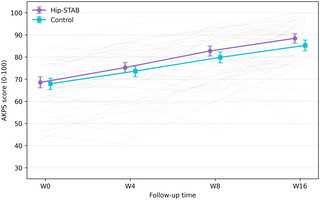
The study involved 487 marathon runners with PFPS, of whom 312 met the eligibility criteria. After applying propensity score matching, 94 runners were retained in each group: one receiving hip stability training (Hip-STAB) and the other receiving standard care (Control). The outcomes were measured at baseline and at 4, 8, and 16 weeks, focusing on Q-angle, pain levels measured by a visual analog scale during running, and functional assessments using the Anterior Knee Pain Scale (AKPS).
Both groups demonstrated improvements over the 16-week period. However, statistical analyses revealed no significant differences between the two groups in terms of Q-angle, running pain, or function. While both interventions led to reductions in Q-angle and pain, the hip stability training did not show superiority over standard care. Notably, the correlation between reductions in Q-angle and improvements in pain levels was significant in both groups, suggesting a complex relationship rather than a straightforward causal link.
The findings of this study are particularly relevant for marathon runners, as PFPS affects a significant portion of the running community. With up to 30% of runners experiencing this condition at some point in their careers, understanding effective treatment strategies is crucial. The study highlights the importance of hip muscle function and stability in managing knee pain, but it also underscores the need for further research to clarify the effectiveness of different interventions.
Research Methodology and Data Sources
The research was conducted using electronic medical records and rehabilitation databases from a single sports medicine center and was approved by the Institutional Review Board of Lincoln University College. The study's design was retrospective, meaning it analyzed existing data rather than conducting a new clinical trial.
The Final Kick
In conclusion, while hip stability training may offer benefits for some runners, the lack of significant differences compared to standard care suggests that a multifaceted approach to managing PFPS may be necessary. Runners experiencing knee pain should consult with healthcare professionals to explore tailored treatment options that address their specific needs.
As the study illustrates, addressing patellofemoral pain syndrome in marathon runners requires a nuanced understanding of biomechanics and individual responses to treatment. While hip stability training is a promising intervention, it is clear that runners may need to explore a variety of strategies to effectively manage pain and maintain their training regimens. The relationship between Q-angle and pain is complex, and runners should be aware that improvements in one area do not necessarily guarantee relief in another. This study serves as a reminder of the importance of personalized care and the need for ongoing research in the field of sports medicine to better support athletes in their pursuit of performance and health.